The importance of having a media kit for bloggers and freelancers
Yes, you need a media kit. It doesn’t matter if you are a small blogger, large co-op of bloggers, or a freelancer, a media kit is your way to make more money. You need one, and you need to make it accessible so people can easily find it and determine of they want to read your work and/or work with you.
Why you need a media kit:
It eliminates the need to send out lengthy About Me emails to people who may want to work with you. When you offer this information up front, it helps them see if you are what they’re looking for before wasting your time or any more of theirs.
Everyone is creating one, and you don’t want to be left behind. When companies go to look for bloggers and freelancers to work with, they want someone who is up to date and professional. A media kit with convey that you know what you are doing.
It makes things easier on you and your readers. It isn’t always about getting hired by more people. It can also be about reaching more people. By having a media kit, you can show people what you and your blog are about before they waste time reading your posts. They can also determine more about you and decide if they want to share your blog or follow you, without ever having to blow up your email or comment section with questions that can be answered in the media kit.
What to put in the media kit
Short bio: who are you, what are you about, and why did you start blogging or freelancing. This section should be no more than 350 words.
Your site’s stats, or your personal stats:If you aren’t tracking these, you need to be. Then, you need to post them for companies to see. They will want to know what you can offer them by way of readership and page views.
Contact information: How do people reach you? Include all emails, site links, and social media you wish to give people, so they can contact you.
Social media reach: Speaking of social media, how many people follow you, retweet you, share your work, or tag you? Include a running counter of these things so this stays up-to-date for recent views.
Demographics:This includes your personal demographics and those of your readers.
Services and rates: What do you offer and how much do you charge?
Past work: Have your worked with any brands? List them. Been featured in a magazine or website? Link to it. Add other links to showcase your best work, as well.
Recommendations: Link to or list contact info of people who would write a recommendation for you.
FAQ: This is not necessarily needed. However, if you want to reach more readers and not just focus on companies to hire you, write a basic FAQ. Cover your basic demographics, what your blog is about, what you can do, and how much you charge, contact information, and other questions you may get often. This will not be as extensive or detailed as the media kit. Think of it more as an overview of the media kit to give short answers. Add links to the media kit so that people can find more information if they so desire.
Creating your media Kit
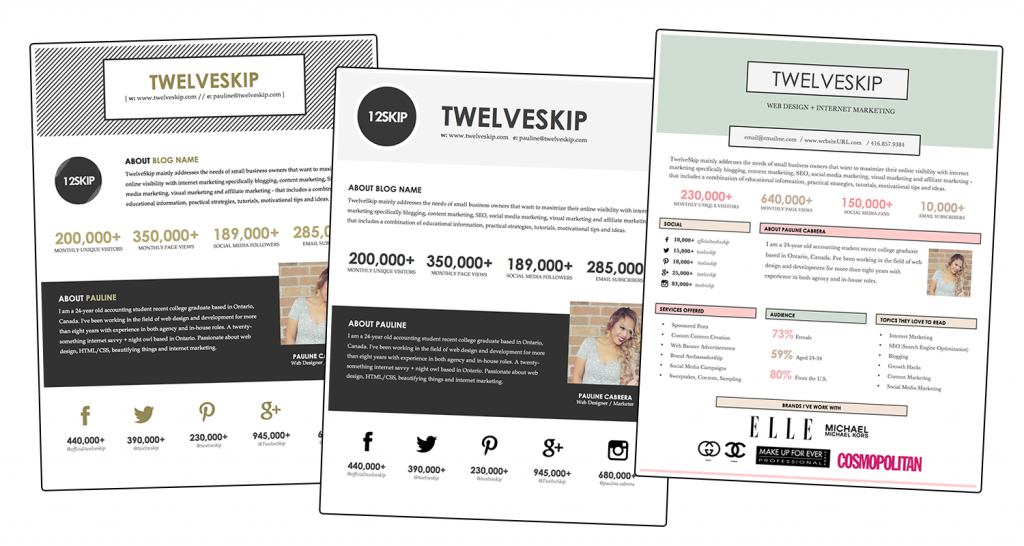
If you are like me, you have put off creating a media kit because you just don’t know how or don’t have the time! That is why I’m so happy that I found Hip media kits! They have done all the work for you and created some great media kit templates that allow you to edit as you need, in a program that we are all familiar with which is Microsoft Word (2007 or up).
So, the other night I decided to test them out and currently after seven years of blogging I now have a professional media kit! I was impressed on how easy it was to edit the templates and add my information! I also loved that I can change the colors to match my blog theme! I had it completed in less than 30 minutes! The best part is the price is affordable for everyone! So no more excuses, for just $24.99 you can get a one page or three-page template and have your own media kit in the time it would take you to create a blog post!
So, stop putting it off and head on over and purchase your media kit template today!



Short and to the point. Very informative: THANK YOU!!!