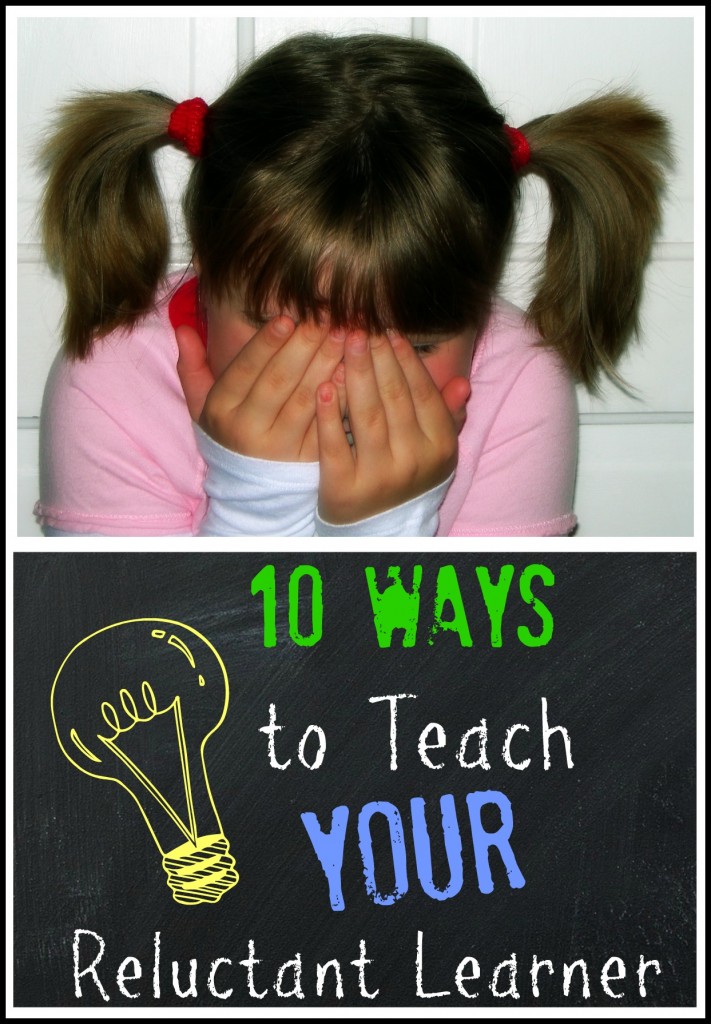
There are some children that have zero desire to learn, whatsoever! Homeschooling one of these children can feel like you are running up a mountain on a treadmill. You can’t pour information into their brain and expect it to stick – you have to get creative. Or, at least, you have to get on the same level.
1. Get Comfy
Some children prefer to stand at a tall desk or to sit on an exercise ball while learning. The great thing about homeschooling is, you can allow them to do that!
If you don’t know what will appeal to your child best, ask. These are the most common seats a reluctant learner likes to use: exercise/balance ball, bean bag chair, swirling office chair, swivel stool, or standing.
2. Learning Environment
The most important lesson you can teach your child is to always be learning. You can do this by creating a learning environment within your home and family practices.
For the time being, get rid of anything in your home that is a waste of your child’s brain power! Switch out magazines for educational magazines that appeal to your family’s interests, and scatter them around so they are easily accessible. Stop watching television shows that aren’t educational. Educational isn’t boring! A television streaming subscription (Amazon Prime Video, Hulu, and Netflix) is a great way to find educational shows when you want them.
Also, be sure to check the lighting in your home. Allow as much natural light in as you can and substitute for hi-res bulbs in rooms you can’t.
3. Change the Scenery
Sometimes we all need a change of scenery. Try taking class outside, to the park, or even the library. Doing this frequently will help your family avoid feeling like a captive at home.
4. Change the Curriculum
Your child may HATE the curriculum you LOVE. Toss it! You aren’t the one that is supposed to love the curriculum, your child is.
When selecting curriculum, get your child involved in the entire process. Ask what your child’s dream curriculum is and find it! Take pieces from different sets if you need to, but make sure your child is pleased with the selection.
*Tip: Try buying used until you and your child can find what works best..
5. Don’t Let Them Be Lazy
Some children… are lazy.
(There, I said it. Ouch… it’s a painful word.)
Don’t let them!
These children will ask to work in their room. They will ask if they can do it later, or if they can turn it all in on Friday because
“I promise I’ll do it on my own mom!”
No! No! No! This is a great way for your child to waste valuable learning time. Come Friday, you will be a full week behind and even more frustrated. Hold their hand until the child can prove they can be trusted to complete the work as promised. Set small daily goals of turning in work. After these benchmarks are being met regularly, you can start giving weekly assignment tasks.
6. Read Aloud
Do you have a child that says they are reading, but you suspect isn’t? Make quiet reading something that is done on their own time and all school related reading be read aloud to you, a sibling, the dog…
Reading as a family, whereas one person reads each day, is a great way to promote bonding and be certain your child is meeting reading fluency goals.
7. Interest Led Learning
Interest led learning is when you create unit studies around whatever your child’s interest of the moment is. At first, your child may test your limits and select something completely off-based… let them. You can learn from skate boarding, dance, motocross, racing, cooking…whichever crazy idea they come up with.
Until you have taught them to love learning, let them lead!
8. Field Trips
Take a LOT of field trips. Children need to learn in a way where they don’t know they are learning. Take lots of field trips – two, or more, each week! (I can feel your eyes getting bigger…)
Field trips don’t have to be expensive. Some of them don’t cost anything at all. Scavenger hunts at the park are free. Bicycle rides through the wilderness trail is free. Fishing may be free. Art galleries are free. Walking along the beach in the morning and collecting shells… free! All of these activities are learning opportunities outside of the home, thus, they are free field trips!
Check your community calendar to find free events, seminars, classes, and activities in your area to help you plan.
9. Recruit Help
Please don’t take it personally that your child may be reluctant to learn from you. It isn’t personal. You and the child may need a little push in the right direction. Hire a tutor, but sit in and observe the teacher’s teaching style to see how it is working with your child. You will likely learn tricks and techniques to keep the child focused and yourself composed.
Another option is to join a co-op. The change of environment, teacher, and the addition of other homeschool students can set off a spark for your child. *Ask if they have a trail term to see if it is a good fit for your family before committing to a full semester.
10. DON’T GIVE UP!
You are NOT a failure! Don’t give up. Every day of effort you put forth puts you closer and closer to your child learning and LOVING IT! How much information your child can recite should never been the goal, teaching your child to learn with everything they do – and to love it – is the goal of homeschooling.