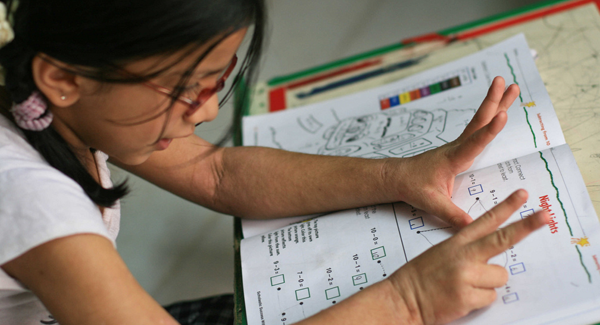
Children of all ages have to study and do well in school. The more they practice the easier they will understand the lesson. This does not mean that homework and studying has to be boring. They are many things parents and children can do to make studying more fun.
Tip 1: Visual study
It is being discovered that more and more children are visual or tactile learners. They like to see things, do things, and touch.
When completing math problem a child should use visual to count out the numbers. They can use something small such as Cheerios, or M&M to learn how to add and subtract. They can even be used for multiplication, divisions, and grouping of numbers.
The M&M also work well because they help a child learn how to sort items. When they child is done they also get to have a treat.
Tip 2: Alphabet magnets
Learning how to spell can be difficult for some children. When working on spelling or even learning to read basic sight words alphabet magnets for the refrigerator work well.
They are easy to move so a child can arrange and rearrange them to work different works. They are also fun to play with while learning.
Tip 3: Flashcards
Flashcards are a great tool for learning words. They encourage a child to recognize the word of number problem through repetition. Many games can be made using the flashcards.
The child and a partner can play “Go Fish” where they have to match similar words or pictures A child can look at the flashcard and draw a picture of the word for subjects such as science. Using flashcards is a great way to study when turned into a fun game.
Tip 4: Exercise
Before a child begins their homework or study session they should do some form of physical activity or exercise. They do not have to do this for a longer period of time. Ten to fifteen minutes will be fine. This is to get the blood flowing and will make the child more alert.
Since children have a lot of energy this allows them to use some of it and then focus on their assignment. Many studies have shown this increases attention span and attention to the given task.
Tip 5: Alternatives to paper
Many young children may have some trouble with handwriting. It may be hard to hold a pencil in the correct manner and it can be difficult to form the numbers.
A child does not have to use a pencil and paper to learn how to write. When learning how to form the letters a child can write on many different things. They are shirts and stuffed animals that have special markers a child can use.
Many are washable so they can be used over and over. These are just some tips to make studying and homework more fun. The more encouragement and enthusiasm a parent has toward homework the more a child will learn to enjoy it and make a game out of the work.
This guest post was contributed by York Notes



Sure, flashcards are a great tool for learning words. My 6-year-boy has been learning by flashcards. His favourite tool is Superflashcard. I love the way he studies hard through letters, sound and pictures on this app, repeats words and spells it. Now he can rememeber faster and respond more flexible than the previous time. I am so proud of him.